
Puerto Vallarta has a magnificent sky that almost nobody sees. A city of half a million people throws up enough light to erase everything except the Moon, Venus and a handful of the brightest stars. To get the other sky — the one with the Milky Way as a visible band across it — you have to leave, and the nearest place on this coast where that is genuinely true is Mayto, in the municipality of Cabo Corrientes.
Mayto has been the local weekend beach for decades. What is new is that it now has lodging on the sand, an airstrip of its own, and a long-term project built entirely around the night: the Parque Astrológico, twelve zodiac temples under one of the clearest skies in Jalisco. This is a guide to the night half of the trip — what you can actually see, when to go, and what is built versus what is still on paper.
Why the Sky Is Different Down There
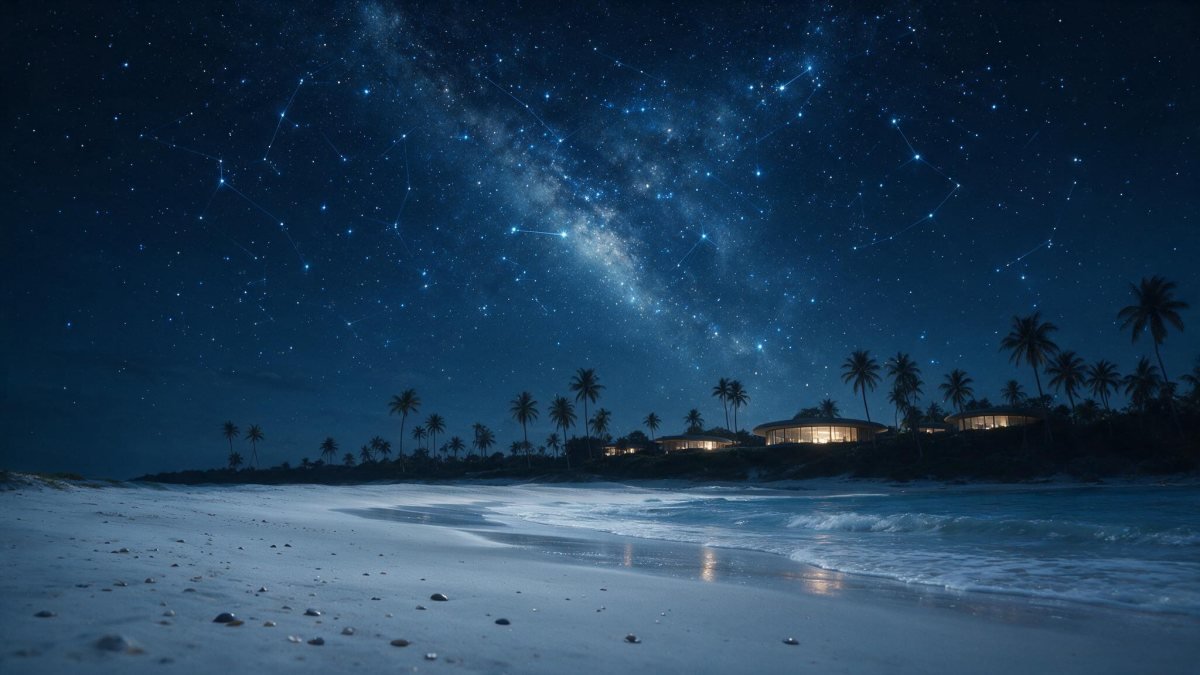
Light pollution is a question of distance and of what is between you and the horizon. Mayto sits on an open stretch of coast in Cabo Corrientes, roughly an hour and a half south of Puerto Vallarta by road, with the Sierra behind it and the open Pacific in front. There is no town in the line of sight. Nothing on the ocean side casts light at all.
The practical result is the thing astrotourism exists for: the Milky Way is visible with the naked eye, and the constellations rise over the water rather than over a row of streetlights. On this coast that is rare. Getting the same darkness inside Banderas Bay means driving well into the Sierra and giving up the horizon; here you get the darkness and the ocean at the same time.
What You Can Actually See, by Season
The sky is not the same show all year, and knowing what is up saves you from arriving with the wrong expectations.
- April to September is the Milky Way core season in the northern hemisphere. In those months the bright, dense centre of the galaxy climbs over the southern horizon — the view most people are chasing. Peak visibility is around the middle of the night in late spring and earlier in the evening as summer goes on.
- June to October is also the rainy season, which cuts both ways: the air is cleaner after a storm and the sky can be spectacular, but cloud cover is a real risk and the access road is at its worst. Check the forecast, and give yourself two nights if the trip matters.
- November to May is dry and reliable, with easy driving and settled weather. The galactic core is low or absent for part of it, but winter constellations over an empty ocean are their own reward, and the odds of a cloudless night are much better.
The One Rule That Matters More Than the Season
Plan around the new moon. A full moon is bright enough to wash out the Milky Way completely, and no amount of driving fixes it. Aim for the few nights either side of new moon, and if you can only travel on a full-moon weekend, come for the beach and treat the sky as a bonus.
The Parque Astrológico
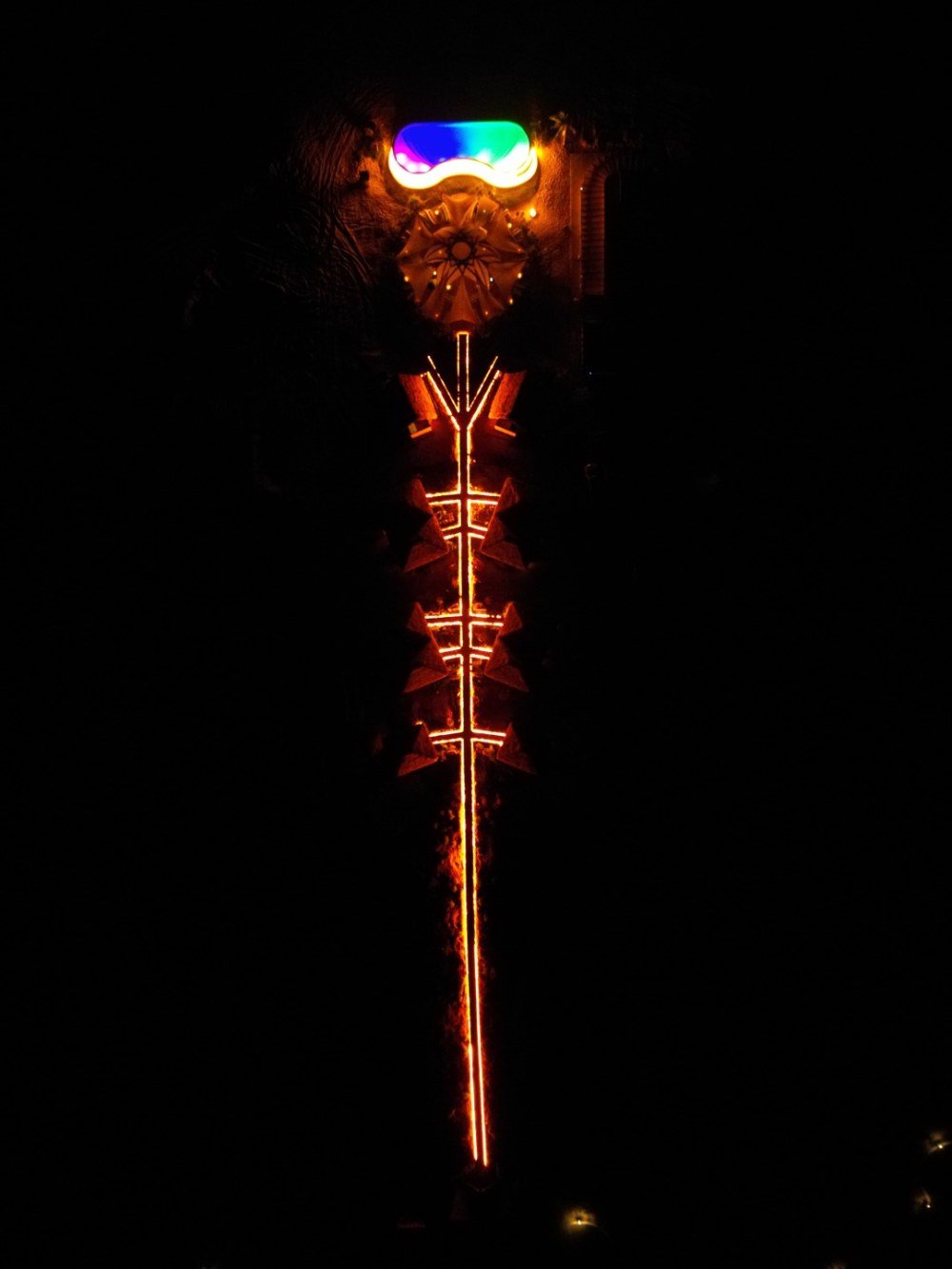
The project that has grown up around this sky is unlike anything else on the Mexican Pacific. The Parque Astrológico is organised around the zodiac: twelve roundabouts, one per sign, which act as gateways to twelve Zodiac Temples. Each temple has its own symbolism, materials and architecture, and the route between them is what makes the whole thing a park rather than another gated development.
Alongside the temples the plan sets out six open-air themed experiences — ranging from self-care and gastronomy to art and fashion — plus an observatory. The intention is that the visit is not purely architectural: that there is something to do in each zone of the route, by day and by night.
What Is Built and What Is Not
This is the part worth being honest about, because arriving with the wrong picture ruins a good trip. The park is a phased project and it is still being built. What operates today is the air access and the beachfront lodging. The temples are going up in stages, and the first of them, Virgo, has a projected delivery of 2027. The master plan covers all twelve temples with themed residences attached to each, and has been developing in phases since sales began in 2024.
So if you go this year, you are going for the beach, the silence and the sky. The temples are the long film, and they are worth following, but they are not the reason to book a room in 2026.
Getting There, Including the Fifteen-Minute Version
By road it is Highway 200 south from Puerto Vallarta, through El Tuito, then the coast road down toward Mayto and Tehuamixtle — about an hour and a half, with a final narrow and partly unpaved stretch. In the dry season a normal car is fine; from June to October a higher vehicle is a sensible precaution. Our transportation guide covers how getting around this region works in general.
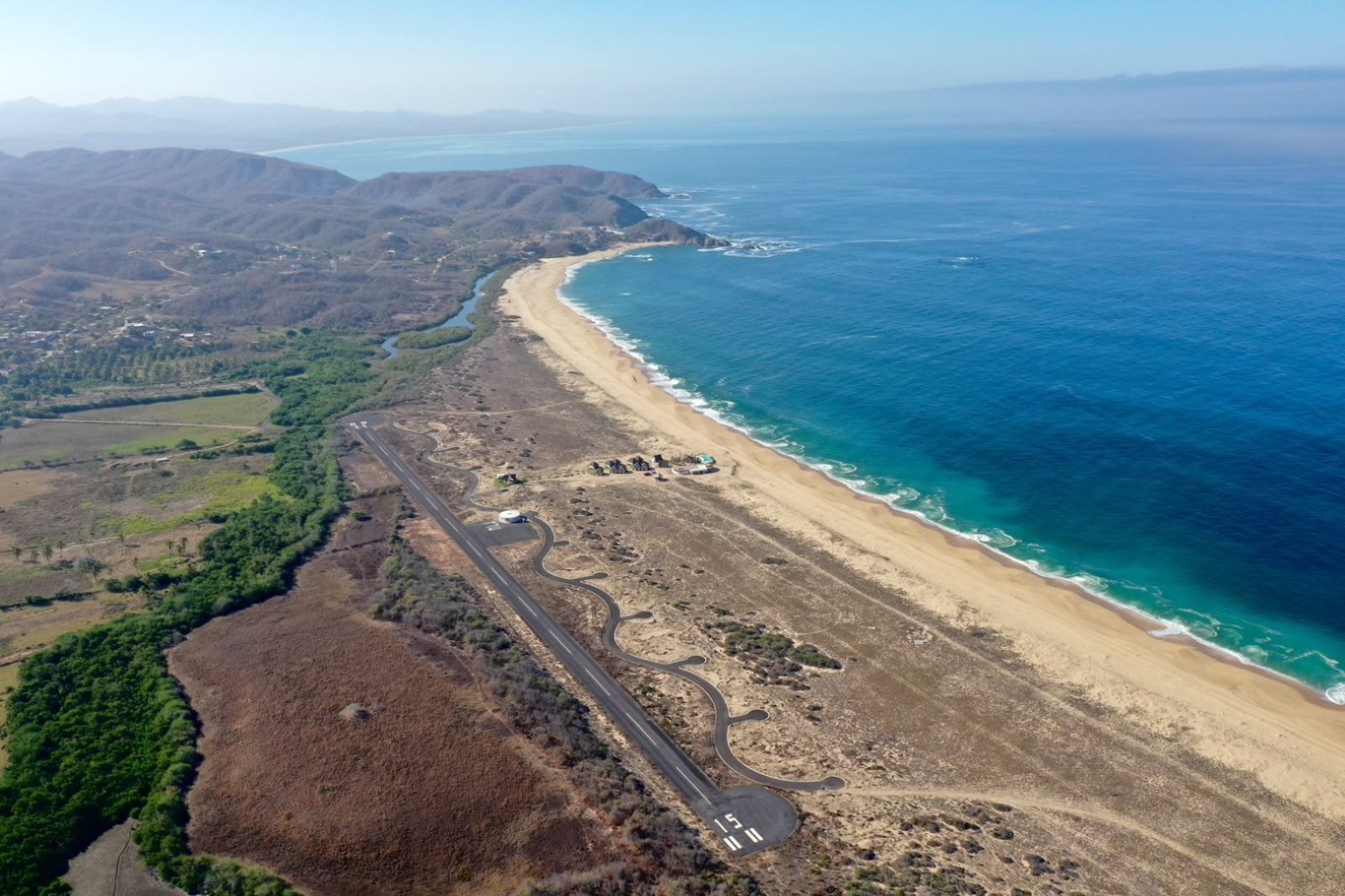
The alternative is new. Mayto has its own airstrip inside the development — paved runway, taxiway, apron and terminal — inaugurated on 20 June 2025. The destination's own figures are zero stops, 15 minutes of flight from Puerto Vallarta, and the hour and a half by road as the alternative. Presented as Mexico's first themed airport, its taxiway curves deliberately as a tribute to the serpent of the Tenochtitlan legacy, the terminal is a circular white volume with a four-pointed star on the roof, and the letters MJL are painted on the apron.
One clarification that matters for planning: this is a strip for general aviation, private and charter flights. There are no scheduled commercial airlines. You still fly into Puerto Vallarta International and continue from there.
Staying the Night — Which Is the Whole Point
You cannot do astrotourism on a day trip. The lodging at the development is a small run of beachfront suites under palapa roofs, a few steps from the runway, with a pool and the common area facing the water. There is a single category of room — king bed, warm lighting, private terrace, ocean view — open all year, with local hosts on site.
Booking is direct through mayto.com/booking, by email at reservations@mayto.com, or on +52 33 3822 5731. If you are flying in, the flight, the room and the park visit can be arranged as a single arrival.
Practical Notes for a Night Under That Sky
- Red light only. A head torch with a red mode preserves your night vision; a phone screen destroys it for everyone within ten metres.
- Give your eyes 20–30 minutes. Full dark adaptation takes that long, and most people give up after five.
- Bring a layer. An open beach at 3 a.m. is colder than the afternoon suggests, in any month.
- Cash and a full tank. Rural coast: no reliable ATM, and you should fill up in Vallarta or El Tuito.
- Download your maps and your star app before leaving. Mobile signal is intermittent.
- Respect the beach. Mayto is a turtle nesting beach with a community camp. Never shine a light directly at a turtle, and keep vehicles off the marked zones.
The Daylight Half
You will have a day to fill before the stars come out. The beach at Mayto runs for around five kilometres of undeveloped sand, and it is open ocean — heavy shorebreak, rip currents and no lifeguards, so it is a walking and sunrise beach rather than a swimming one. For a proper swim, drive the eight kilometres on to Tehuamixtle, the fishing cove next door, where the water is calm and the palapa restaurants are known for oysters. Our guide to the best beaches in Jalisco puts this whole stretch in context, and the Vallarta Surf team know better than anyone how the open coast behaves.
Frequently Asked Questions
Can you really see the Milky Way at Mayto?
Yes, with the naked eye on a clear, moonless night. There is no town nearby and therefore almost no light pollution, which is exactly what naked-eye Milky Way visibility requires.
When is the best time to go stargazing?
Around the new moon, in a month with clear weather. April to September is the Milky Way core season; November to May gives you the most reliable cloudless nights.
Is the Parque Astrológico open to visit?
It is a phased project still under construction. The air access and the beachfront lodging operate today; the first temple, Virgo, is projected for 2027.
How far is Mayto from Puerto Vallarta?
About an hour and a half by road via El Tuito, or 15 minutes by air to the development's own airstrip.
Is there a commercial flight to Mayto?
No. The strip serves general aviation, private and charter flights. Commercial travellers fly into Puerto Vallarta International.
Do I need a telescope?
No. The whole appeal of a sky this dark is that the naked eye is enough. Binoculars add a lot for very little weight; a telescope is for people who already own one.
In Short
Mayto is the closest place to Puerto Vallarta where the night sky still works properly — five kilometres of empty beach, a fishing cove for lunch, turtles on the sand and the Milky Way over the water. The zodiac park is the long-term story; the sky is available tonight. The whole destination, including the airstrip and the beachfront hotel, is at mayto.com. For the rest of the region, the English-language Puerto Vallarta travel guide and the list of things to do in Puerto Vallarta will fill the days on either side.
Ready to experience Puerto Vallarta?
Book tours and transfers with our local bilingual team.
See Tours